Perched 710 metres above Rio de Janeiro on the granite peak of Corcovado Mountain, Christ the Redeemer has watched over one of the world's most vibrant cities for nearly a century. Its outstretched arms tell a story of faith, national identity, and extraordinary human ambition that continues to captivate millions of visitors every year.
The idea of crowning Corcovado Mountain with a Christian monument dates back further than most visitors realise. As early as the 1850s, Vincentian priest Pedro Maria Boss proposed placing a religious statue on the peak to honour Princess Isabel, the Brazilian royal who would later sign the Lei Áurea abolishing slavery in 1888. The proposal gained little traction at the time, but the concept of a commanding Christian presence over Rio de Janeiro never entirely disappeared. The dramatic silhouette of Corcovado — its name meaning 'hunchback' in Portuguese — had long captured the imaginations of Rio's residents, and the mountain seemed almost purpose-built to carry something monumental skyward.
The project was revived in earnest during the early twentieth century, driven by the Catholic Circle of Rio de Janeiro. Concerned about growing secularism following Brazil's transition to a republic in 1889, the organisation formally proposed the monument in 1921 and launched a nationwide fundraising campaign called Semana do Monumento, or Monument Week. Brazilian Catholics donated generously, providing both the financial foundation and a powerful demonstration of popular support. The campaign transformed what had been an architect's dream into a genuine national project, ensuring the statue would represent not just religious devotion but a collective expression of Brazilian identity at a pivotal moment in the country's modern history.
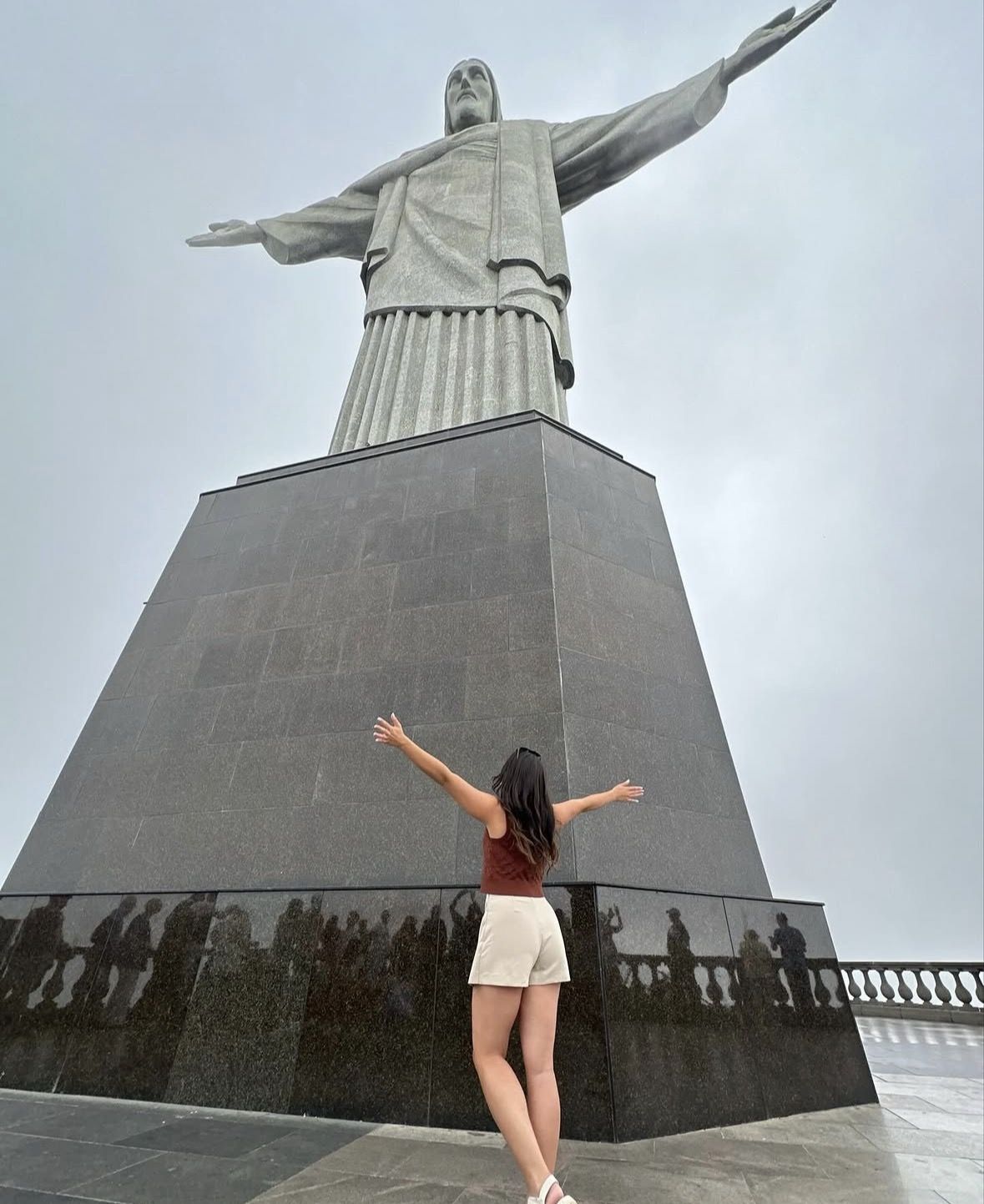
Selecting the right design was no simple task. Several concepts were considered before engineers and the Catholic Circle settled on the now-famous figure of Christ with outstretched arms, symbolising peace and welcoming all who approach. Brazilian engineer Heitor da Silva Costa developed the winning design, which he refined over several years. He travelled to Europe to study construction techniques and initially envisioned Christ holding a globe in one hand and a cross in the other, before the simpler, more powerful open-armed pose was finalised. The chosen design was elegant, structurally achievable, and unmistakably visible from virtually every part of the city below — a key consideration from the very beginning of the planning process.
Construction formally began on 4 April 1922, coinciding with the centenary of Brazilian independence, though the bulk of the work took place between 1926 and 1931. French sculptor Paul Landowski was commissioned to create the head and hands, which were crafted in his Paris studio before being shipped across the Atlantic to Brazil. The statue's outer surface, composed of thousands of triangular soapstone tiles sourced from Sweden, was assembled by a team of local artisans under extraordinarily challenging conditions. Working at altitude with rudimentary equipment, these craftsmen — some of them women who signed their names inside the tiles — quietly embedded themselves into one of the most recognised structures on earth.
The engineering challenges were formidable. Transporting materials up the steep slope of Corcovado required the use of a cog railway originally built in 1884. Workers hauled tonnes of reinforced concrete and stone up the mountain, constructing the 8-metre-tall pedestal and the 30-metre statue in conditions that tested both ingenuity and endurance. The internal structure consists of reinforced concrete designed by Brazilian engineer Pedro Viana, while the outer mosaic of soapstone tiles provides not only aesthetic beauty but remarkable weather resistance. Christ the Redeemer was officially inaugurated on 12 October 1931, in a ceremony overseen by Cardinal Sebastião Leme and attended by thousands, including President Getúlio Vargas.
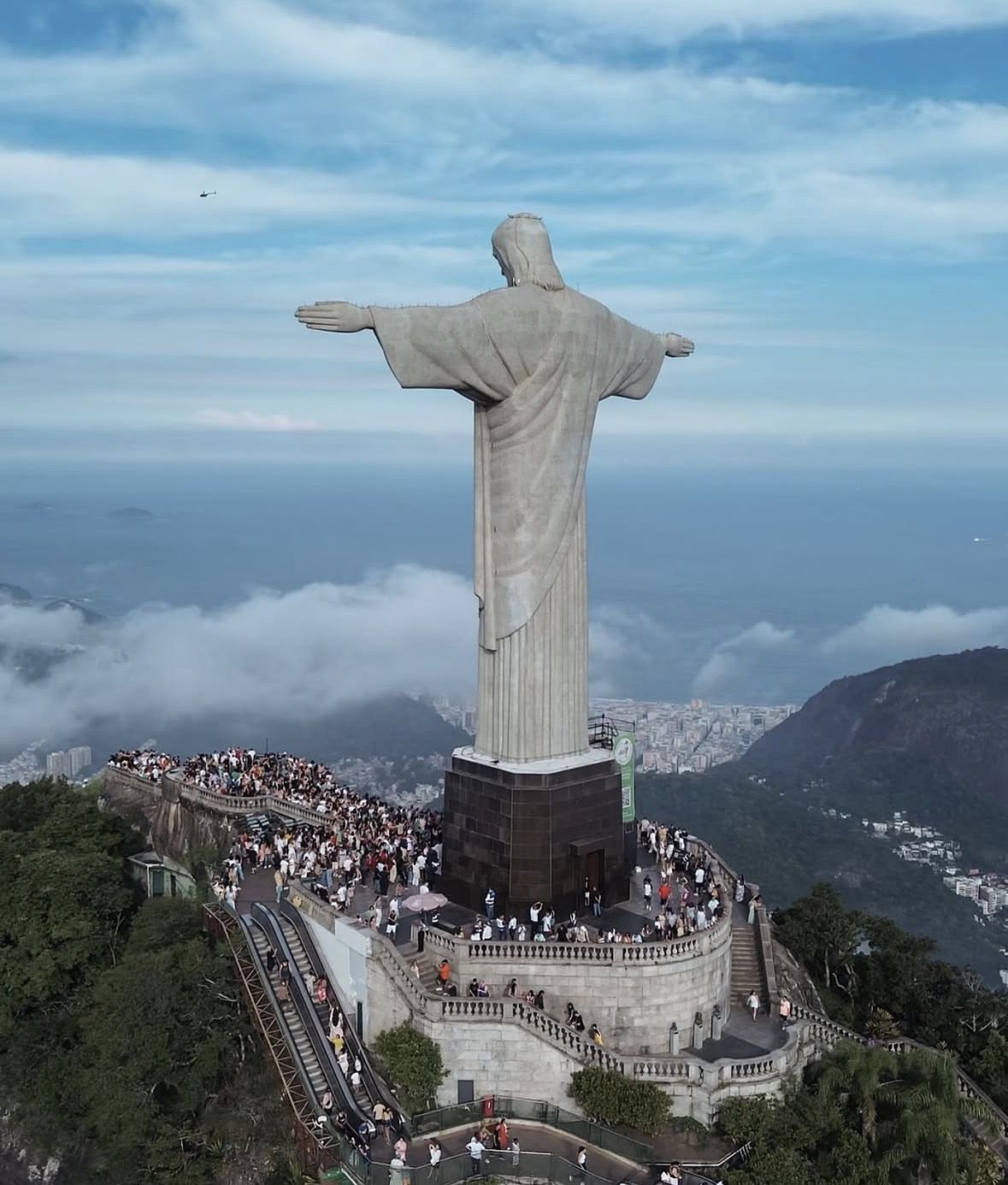
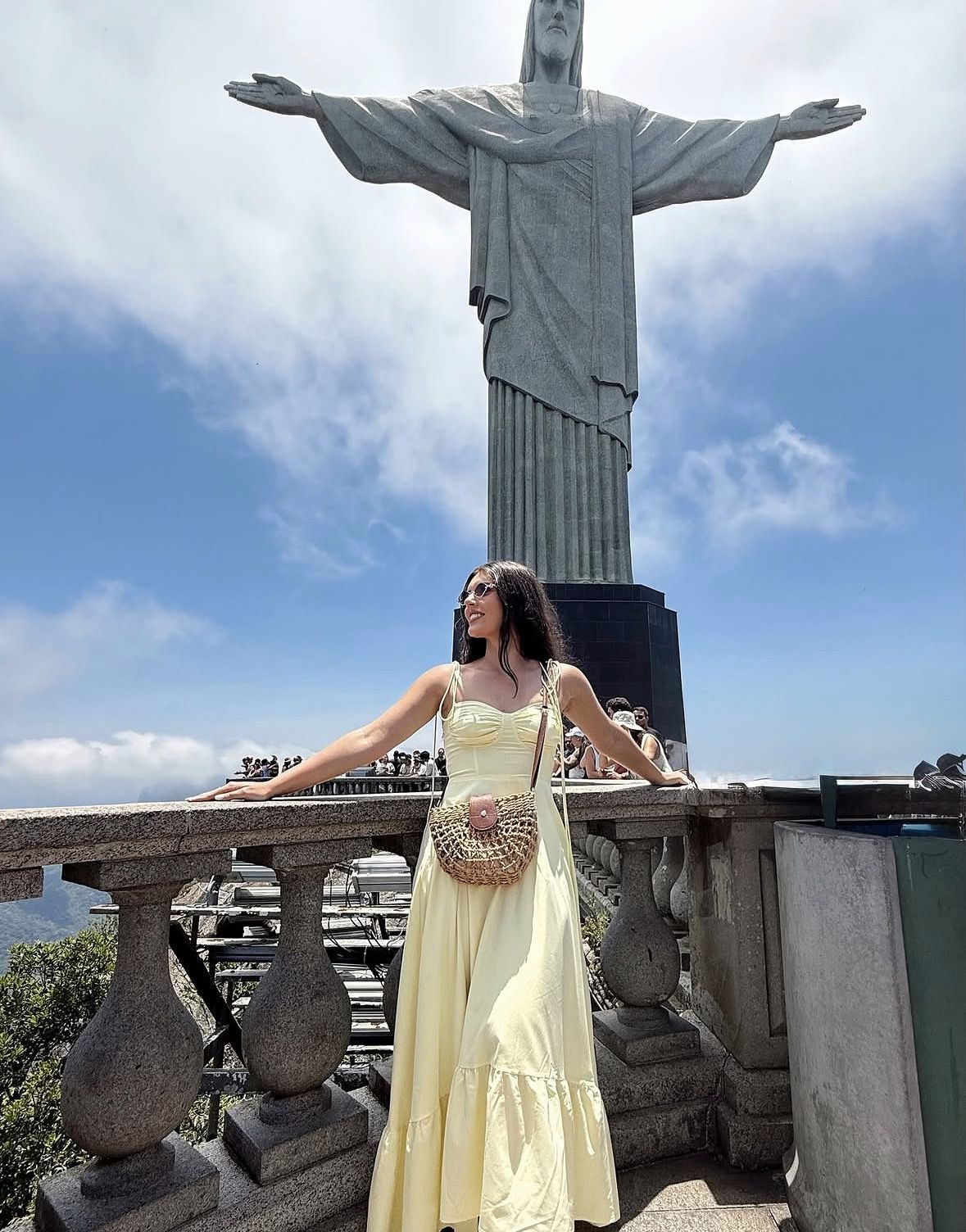
From the moment of its inauguration, Christ the Redeemer captured international attention. Early photographs circulated widely, and the statue quickly became the defining image of Rio de Janeiro — appearing on postcards, magazine covers, and eventually in films. Its silhouette became shorthand for Brazil itself, a visual symbol that transcended religious denomination and spoke to something universal about human aspiration. UNESCO designated the Atlantic Forest surrounding Corcovado a World Heritage Site in 1992 as part of the Atlantic Forest South-East Reserves, adding a layer of environmental significance to the mountain's already profound cultural status. The statue sits at the heart of Tijuca National Park, one of the world's largest urban forests.
The defining modern milestone came in 2007, when Christ the Redeemer was voted one of the New Seven Wonders of the World in a global poll organised by the New7Wonders Foundation. Over 100 million votes were cast worldwide, and the announcement brought fresh waves of international visitors to Rio. The recognition was more than a tourism boost — it formally placed the statue alongside the Colosseum, Machu Picchu, and the Taj Mahal as one of humanity's most treasured landmarks. Brazilian pride swelled enormously, and subsequent years saw significant investment in visitor infrastructure, including upgraded cable cars, improved pathways, and expanded viewing platforms around the base of the statue.
The statue has also served as a canvas for global events and causes. In 2014, when Rio hosted the FIFA World Cup, colourful lighting transformed Christ the Redeemer into a beacon of international celebration. During the 2016 Rio Olympics, the statue was illuminated in the colours of competing nations, and in 2020, during the COVID-19 pandemic, it was lit to honour healthcare workers worldwide. These projections and illuminations have reinforced the statue's role not merely as a religious monument but as a living symbol of shared humanity — a quality that makes it resonate with visitors of every background, culture, and belief system.
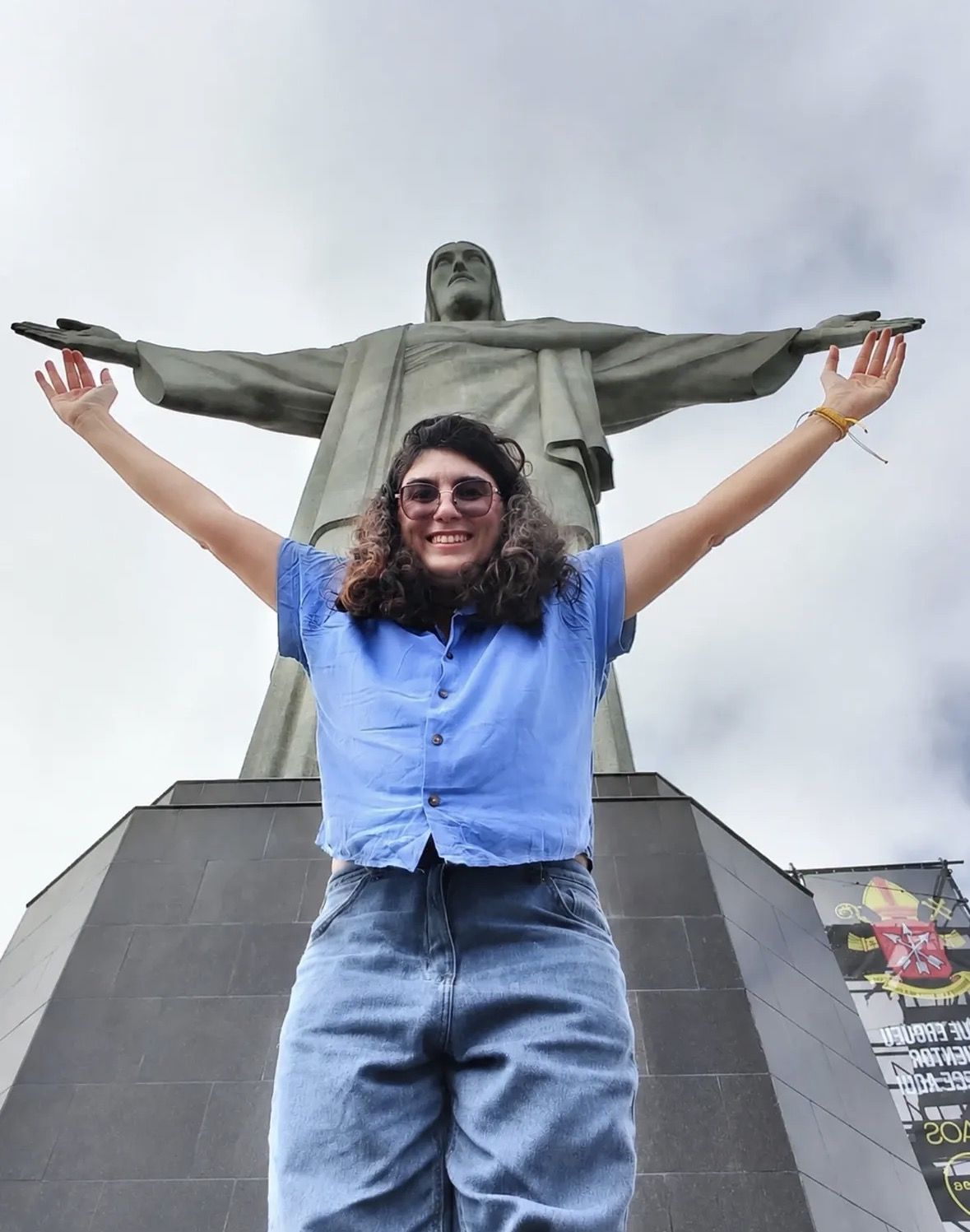
Today, ascending Corcovado to stand before Christ the Redeemer remains one of the most emotionally powerful experiences in all of South American travel. Visitors can reach the summit via the historic cog railway from Santa Teresa, by van along the forest road, or on foot via hiking trails through Tijuca National Park. The panoramic view from the viewing platform — sweeping across Guanabara Bay, Sugarloaf Mountain, the beaches of Copacabana and Ipanema, and the sprawling favelas and skyscrapers of Rio — is arguably as breathtaking as the statue itself. Sunrise and sunset visits attract photographers and romantics alike, as the golden light plays across the soapstone tiles in ways that change the statue's appearance hour by hour.
More than nine decades after its inauguration, Christ the Redeemer continues to evolve as both a sacred site and a world-class visitor destination. Regular restoration projects maintain the integrity of its soapstone cladding and reinforce the concrete structure against the elements. A small chapel at the base, dedicated to Our Lady of Aparecida, Brazil's patron saint, hosts weddings, baptisms, and religious services throughout the year. Whether you arrive seeking spiritual reflection, historical understanding, or simply one of the most iconic views on the planet, Christ the Redeemer delivers an encounter with something genuinely larger than life. It is a monument that earns its reputation with every visit — and rewards those who make the journey to see it for themselves.
Ready to Experience It Yourself?
A trip to Christ the Redeemer is one of those rare travel experiences that exceeds every expectation — but the right guided tour makes all the difference. Skip the queues, gain expert insight into the statue's remarkable history, and make the most of your time on top of Corcovado. Browse our handpicked tours and book your unforgettable Rio de Janeiro experience today.
Book Your Tour Now